Quick Summary: The “Foul and a Miss” Rule
Under WPBSA Section 3, Rule 14, when a snooker striker fails to make first contact with a legal “ball on” and the referee judges that the player did not make a bona fide attempt to play the best possible escape shot, the referee announces: “Foul and a Miss.” The incoming opponent then has the tactical right to have all disturbed balls replaced back to their exact original positions and force the striker to replay the shot!
The Most Misunderstood Protocol in World Snooker
If you have ever watched the World Snooker Championship at the Crucible Theatre in Sheffield, you have witnessed this dramatic scene: a player snookered behind the green ball attempts a complex two-cushion escape, misses the pack of reds by a quarter of an inch, and the referee immediately calls: “Foul and a Miss.”
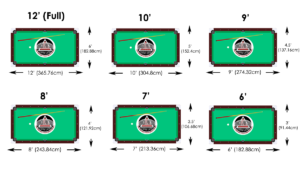
The referee then carefully replaces the cue ball and any disturbed object balls back onto their exact spots on the 12-foot baize—often checking electronic overhead video marker cameras—and demands the shooter try again. The player misses a second time, a third time, leaking 4 penalty points with each attempt, while the tension in the arena mounts.
Why does snooker have such a severe rule, and how does the referee decide between a simple foul and a miss? In this comprehensive guide, our snooker specialists decode the rulebook, explain referee discretion, and reveal the tactical escape psychology used by champions like Ronnie O’Sullivan and Mark Selby.
The Historical Purpose: Eradicating Deliberate Cheating
Before the “Foul and a Miss” rule was introduced, snooker suffered from a glaring tactical loophole: when a player found themselves trapped in a vicious snooker, they would deliberately stroke the cue ball softly into a blocking color ball. They gladly conceded a 4-point foul rather than attempting a difficult escape that might leave their opponent an easy pot.
To eliminate this cynical negative play, the World Professional Billiards and Snooker Association (WPBSA) codified the “Miss” rule. It ensures that a player must make a genuine, full-effort attempt to escape a snooker, giving the opponent full restitution if they fail.
| Shot Scenario | Referee Ruling | Opponent Tactical Options |
|---|---|---|
| Ball on is fully visible (Direct line of sight) | Mandatory “Foul and a Miss” | Can force balls replaced and re-shot, shoot as it lies, or pass back. |
| Snookered behind non-legal balls (Cushion escape required) | “Foul and a Miss” (Unless impossible escape) | Option to have balls replaced to original spot. |
| Snookers Required Stage (Point deficit exceeds remaining points) | Standard Foul Only (NO Miss Called!) | Cannot force replacement; opponent can shoot or pass back. |
The Opponent’s Three Tactical Options
When the referee calls “Foul and a Miss,” the incoming player is granted three distinct legal choices:
- Accept Table and Shoot: Take the table as it lies and pot an open ball.
- Pass the Turn Back: Force the offending player to shoot from the new, awkward position as the balls lie (without replacing them).
- Request Ball Replacement: Demand that the referee replace the cue ball (and any disturbed object balls) back to their precise pre-shot positions and compel the offending player to try the escape again.
Explore Crucible Maximum Break History
See how modern safety escape tactics set up legendary breaks in our guide to the Crucible 147 Maximum Break History.
The 3-Miss Warning Rule When Balls Are in Full View
There is a special, high-pressure condition in professional snooker known as the Three-Miss Rule:
- If a player has a straight, unobstructed direct line of sight to hit any portion of a ball on, they cannot attempt a fancy cushion escape simply to protect position.
- If they miss the ball on their first attempt, the referee warns: “Foul and a miss, and a warning.”
- If they miss a second time, the referee issues a final warning: “A second miss, and if you miss again, you will forfeit the frame.”
- If the striker misses a third consecutive time, the referee immediately awards the entire frame to the opponent!
The “Snookers Required” Exception
A crucial rule nuance occurs late in a frame: if a player is trailing by more points than are available on the table (meaning they need penalty fouls from the opponent to win, known as “snookers required”), the referee is prohibited from calling a Miss!
This prevents a trailing player from exploiting the miss rule to endlessly harvest penalty points once the mathematical frame threshold has passed.
Frequently Asked Questions: Snooker Miss Rule
Can a referee refuse to call a miss?
Yes. If a player is trapped in a snooker so mathematically difficult that escaping is virtually impossible, and the player makes an extraordinary effort that misses by millimeters, the referee has the discretion to call a simple foul rather than a miss.
How do referees put balls back in the exact spot?
Modern professional tournaments utilize ceiling-mounted video cameras with computer overlay monitors (Hawk-Eye technology). The referee looks up at television screens positioned around the arena to match the ball’s position down to the millimeter.
Does a foul and a miss award ball-in-hand?
No. In snooker, ball-in-hand is never awarded anywhere on the table like in pool. The only ball-in-hand in snooker is within the “D” semicircle at the head rail following an in-off scratch.